
Skin is one of our most visible and expressive organs, and as we age, changes in skin quality become harder to hide. At Live Young Medical, we created this guide to cut through confusing trends and help you better understand what drives skin aging, what damages skin over time, and what truly supports healthier skin. When Your Skin Looks Healthier, It Is Healthier.
In this guide, we review:
• the main factors involved in skin aging
• what you can do at home to protect and support your skin
• the role of medical treatments in improving both skin appearance and skin health
Why Skin Changes With Age
Beginning in our 30s, skin gradually changes in response to time, sun exposure, smoking, pollution, inflammation, and internal factors such as hormones. Over time, skin produces less collagen and elastin, pigment and colour become uneven, healing slows, and chronic low-grade inflammation increases. UV exposure also causes DNA damage and accelerates the visible and structural changes we associate with aging.
Another important contributor is the buildup of senescent cells, sometimes called “zombie cells.” These aging cells are no longer healthy but they remain metabolically active. They promote inflammation, interfere with normal tissue repair, and contribute to collagen breakdown; all of which can accelerate skin aging over time.
Estrogen and Women’s Skin Health
Estrogen plays an important role in skin hydration, elasticity, collagen content, healing, and inflammation control. As estrogen declines, especially during the menopause transition and after menopause, many women notice increased dryness, thinning skin, loss of firmness, slower healing, and more visible wrinkling. These changes are not imagined—they reflect real physiologic shifts in skin structure and function.
This helps explain why many women feel they “suddenly” look older around menopause. Skin aging is influenced by many factors, but hormonal change can be a major one.
In the first 5 years after menopause, women lose about 30% of skin collagen, followed by an additional 2% per year.
Facial Aging is not just within the skin; it also occurs because of fat and bone loss in men as well as women.
Starting around age 35, women lose about 1 teaspoon (5 mL) of facial fat annually. This loss adds up. By age 50 that could be as much as 75 ml (~1/3 cup).
Protection Comes First
Sunscreen
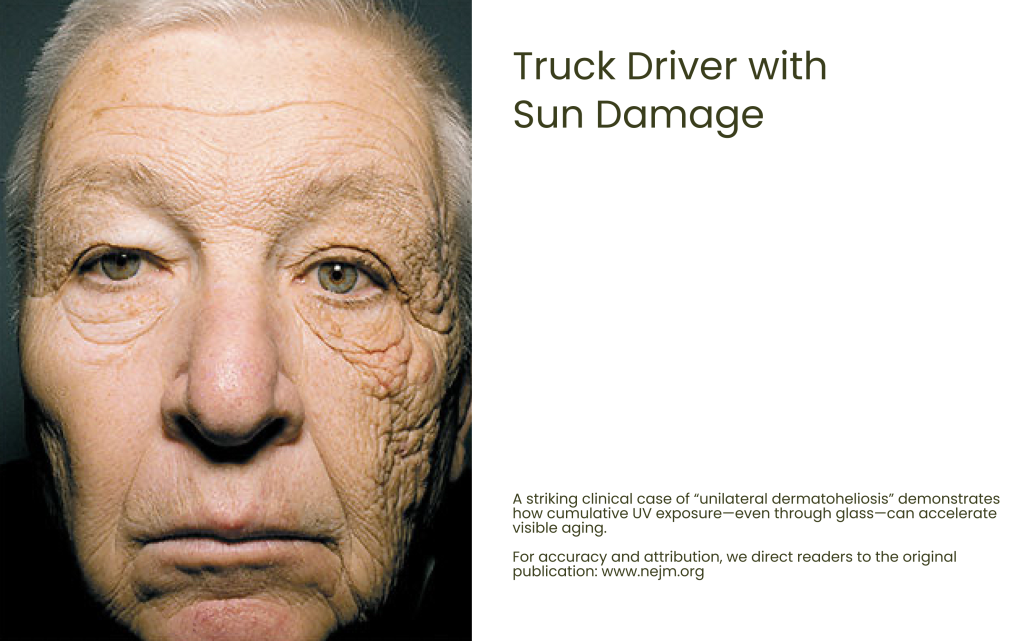
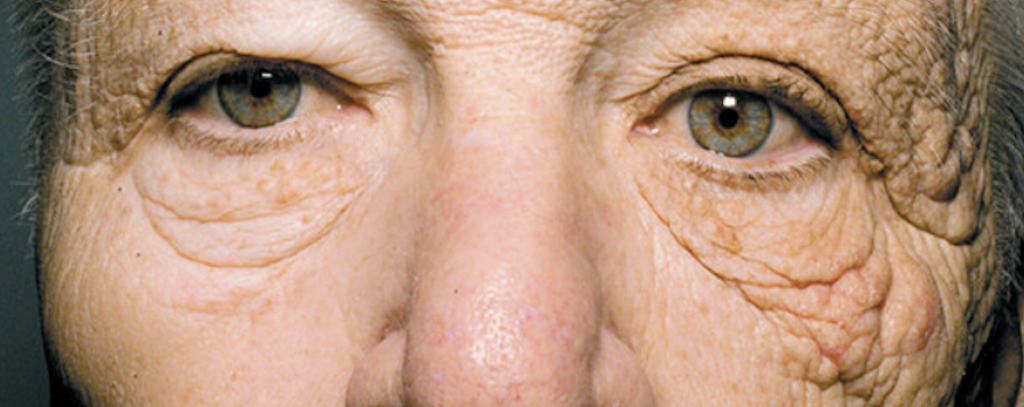
If there is one foundational step in skin preservation, it is daily sunscreen. Many people use sunscreen inconsistently or apply too little, which significantly reduces the protection they actually receive. Broad-spectrum sunscreen helps protect against both UVB, which causes burning, and UVA, which penetrates more deeply and contributes strongly to pigmentation, collagen loss, and visible aging. UVA can also pass through window glass. Both contribute to skin cancer risk.
For daily use, choose:
- SPF 30 or higher and broad-spectrum
- apply enough- about 1 tsp for face and neck*
- water resistance when relevant and
- ocean friendly protection such as non- nano zinc and titanium.
Reapply every 4 hours, more frequently when spending extended time outdoors, if swimming or sweating reapply every 2 hours.
*SPF 100 at 50% application = SPF 10
*SPF 15 at 25% application= SPF <2
Why sunscreen matters even if you do not burn easily
Many people assume sunscreen is only important if they burn. In reality, even without burning, cumulative UV exposure contributes to and long-term photoaging: pigment discolouration, collagen loss, elastin damage, and zombie cell accumulation.
The truck driver image above is a powerful example because it shows what years of repeated UVA exposure through glass can do to the skin on the exposed side of the face.
Additional protection
Sunscreen works best when paired with other simple protective measures:
hats and sunglasses
shade when possible
UV-protective clothing
tinted sunscreen or makeup with iron oxides for those prone to pigmentation, melasma, or post-inflammatory hyperpigmentation
Visible light and blue light can also worsen pigment in some individuals, especially in skin of colour and in those with melasma. Iron oxide–containing products can be helpful.
Supportive At-Home Skin Care
Vitamin C
Topical vitamin C is a helpful antioxidant that supports skin by reducing oxidative stress, supporting brighter tone (lessens pigment), and promoting collagen synthesis. For best effect, it should be used in a well-formulated topical product that does not oxidise in the container. Oral intake alone does not sufficiently protect the skin.
Niacinamide and pigment support
Niacinamide (vitamin B3) application can be helpful for uneven pigmentation. For more significant pigmentation concerns, including melasma, stronger topical treatments may sometimes be appropriate as part of a broader plan that also includes diligent sun protection.
Retinoids
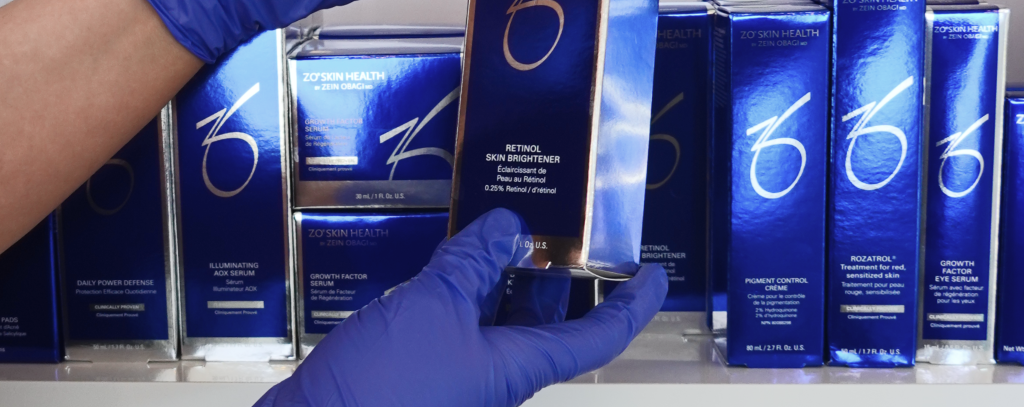
Vitamin A derivatives such as retinol, retinaldehyde, and tretinoin are among the most effective topical treatments for aging skin. They can improve texture, pigment irregularity, and fine lines, while also supporting collagen renewal over time. Because they can be irritating at first, it is best to start gradually. Daily sun protection is especially important when using them.
Estrogen therapy and other supportive options
For some women, topical estrogen may improve hydration, skin thickness, and overall quality when medically appropriate. Topical peptides and oral collagen may offer modest additional support, although they are generally less impactful than the topicals already discussed and in-clinic treatments.
In-Clinic Treatments: Going Deeper than the Surface
Topical skincare can improve the surface of the skin, but it does not fully address deeper structural and cellular changes. Energy-based treatments can reach deeper layers, stimulate collagen and elastin production, and trigger repair pathways that improve both skin appearance, function and health over time.
In clinic Examples include;
- microneedling with radiofrequency
- fractional or fractional ablative lasers
- Deep peel resurfacing treatments
These treatments work by creating controlled injury that stimulates renewal and remodeling that includes decreasing the number of senescent or zombie cells and regeneration of healthy new cells, collagen, elastin and hyaluronic acid. When combined with consistent home care and sun protection, results are typically greater and more enduring.
In Summary
Healthy skin requires more than skincare products alone. It requires protection, repair, and stimulation.
At Live Young Medical, we combine evidence-based home care with personalized in-clinic treatment plans to support healthier, stronger, more resilient skin over time.
When your skin looks healthier, it is healthier.